AI Visibility and Generative Engine Optimization (GEO): The Practical Guide for Startups
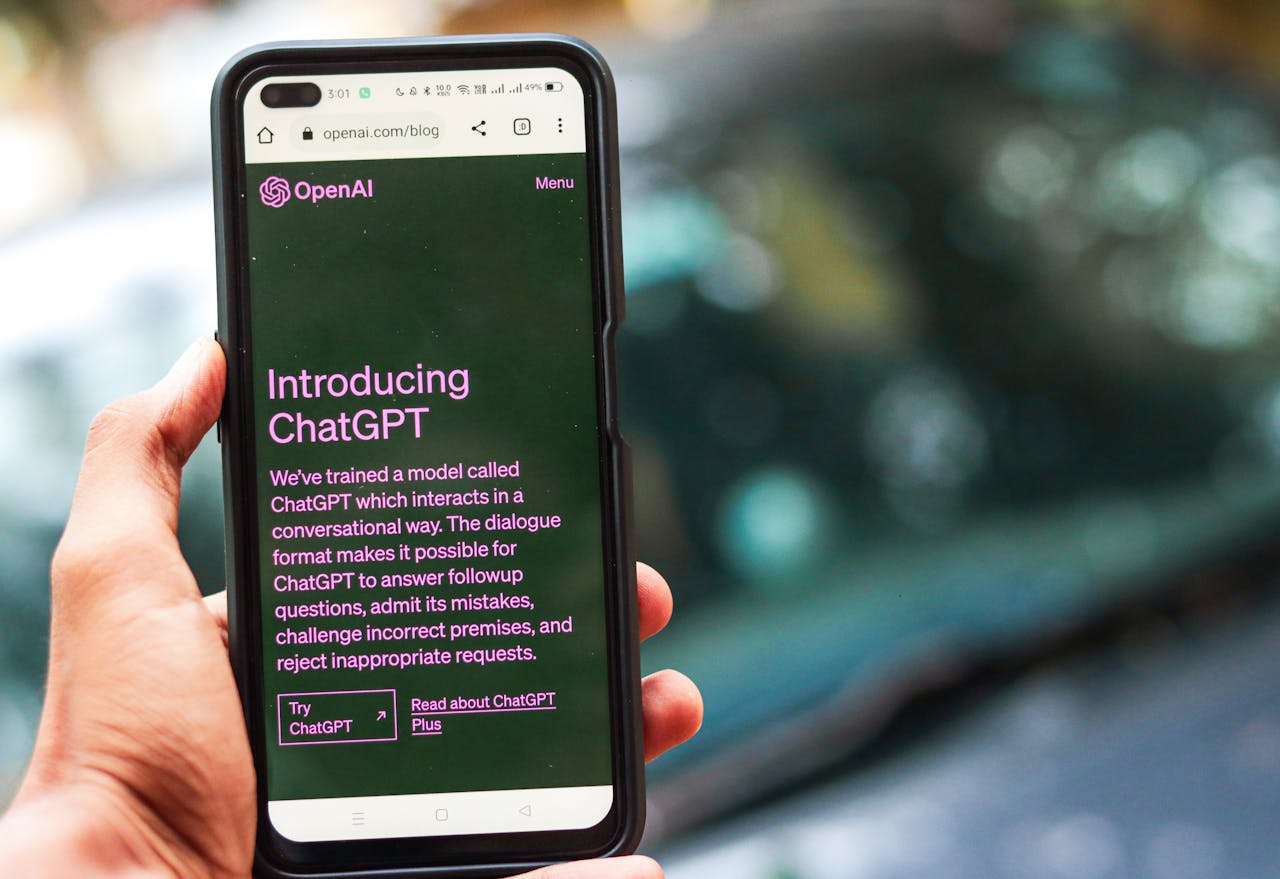
Seventy-five percent of one agency’s inbound leads now come from visibility in ChatGPT and similar AI assistants. That number stopped being an outlier sometime in late 2025. AI-referred website sessions grew 527% year-over-year in the first five months of that year, and the trajectory hasn’t slowed. Yet most startups - even ones with solid SEO foundations - have no strategy for this channel and no understanding of how it actually works under the hood.
This is a guide to Generative Engine Optimization for people who build products, not for people who sell GEO services. It covers the mechanics of how AI search systems actually select sources, the specific content changes that influence citation rates, the technical setup most sites get wrong, and how to measure whether any of it is working - all grounded in the data available as of early 2026.
If you’ve already built a content marketing operation, even a lean one, you have a significant head start. GEO isn’t a replacement for what you’ve been doing. It’s an additional layer on top of it - and understanding that distinction is where most of the existing advice falls short.
How AI Search Actually Works (And Why It Matters for Your Content)
Most GEO guides skip this part or hand-wave through it. That’s a problem, because understanding the retrieval mechanic is the difference between making informed optimization decisions and cargo-culting a checklist.
The Retrieve-Evaluate-Synthesize Model
Traditional search engines crawl your site, index it, and rank it against other pages. When someone searches, they see a list of links ordered by relevance signals - backlinks, keyword density, domain authority, freshness.
AI search doesn’t work this way. When someone asks ChatGPT or Perplexity a question, the system doesn’t paste the full prompt into a search engine and return the top result. Instead, it runs a process called query fan-out: the AI breaks the user’s question into roughly 20 sub-queries, each targeting a different angle of the question. A prompt like “best CRM for startups” might fan out into “affordable CRM for small businesses,” “CRM comparison for early-stage companies,” “CRM with automation for small teams,” and dozens more variations.
For each sub-query, the system retrieves relevant sources, evaluates them for authority, relevance, and recency, and then synthesizes a response that cites the most useful sources.
This has three practical implications for your content:
First, you’re not optimizing for a single keyword - you’re optimizing for a cluster of related queries that an AI might generate from a single user prompt. Content that covers a topic comprehensively, addressing related questions and edge cases, gets retrieved across more sub-queries than content narrowly targeting one phrase.
Second, the AI evaluates your content at retrieval time, not index time. This means freshness matters more than in traditional SEO - a guide updated this quarter will be preferred over one published two years ago on the same topic.
Third, your content needs to be extractable. The AI is pulling specific passages to cite, not linking to your page as a whole. Content structured with clear, self-contained statements - each making a specific, verifiable claim - is more citation-friendly than content that requires reading the full article to understand any single point.
How Each Platform Differs
Not all AI search platforms work the same way, and the differences matter for your strategy.
| Platform | Retrieval Model | Time to Citation | Share of AI Traffic | Key Advantage | Structured Data Benefit |
|---|---|---|---|---|---|
| Perplexity | Real-time web retrieval for every query | Days to weeks | ~15% (growing 25% per quarter) | Fastest to surface new content; always cites with links | Helps with content parsing |
| ChatGPT | Hybrid (training data + real-time browse mode) | 6–12 weeks (training); days (browse) | ~87% | Largest volume by far; pre-qualifies user intent | Confirmed to process schema markup |
| Google AI Overviews | Pulls from Google’s existing search index and knowledge graph | Matches Google indexing speed | Tied to 1.5B monthly users | Traditional SEO strength directly transfers | Google confirmed advantage in April 2025 |
| Claude | Three separate crawlers (training, real-time retrieval, search indexing) | Days (retrieval); weeks (training) | Growing; exact share not yet benchmarked | Most granular robots.txt control of any platform | Processes schema at retrieval time |
Perplexity is the fastest path to AI citations for newly published content. It searches the live web for every query, retrieves current sources, and always cites them with links. In the US specifically, it handles nearly 20% of AI-driven traffic.
ChatGPT is the volume play. It drives the vast majority of AI referral traffic, but its hybrid model means some citations depend on training data updates (slower) while others use real-time browsing (faster). The browse-mode distinction matters: content that answers current, time-sensitive questions is more likely to trigger real-time retrieval.
Google AI Overviews reward existing SEO performance. If you rank well in traditional Google search, you have a built-in advantage here. Google confirmed in April 2025 that structured data gives content an edge in AI Overview selection.
Claude offers the most granular crawler control. Its three separate bots - ClaudeBot (training), Claude-User (real-time retrieval), and Claude-SearchBot (search indexing) - can each be independently managed via robots.txt. This is valuable if you want to allow search retrieval while opting out of training data collection.
The key takeaway: citation rates, sentiment, and brand mention patterns can vary by orders of magnitude across platforms. A multi-platform awareness - even if you don’t actively optimize differently for each one - prevents you from over-indexing on a single source of AI traffic.
GEO vs. SEO: What’s Actually Different (And What Isn’t)
There’s a growing cottage industry of GEO consultants positioning this as an entirely new discipline. That framing is misleading. According to multiple industry analyses, roughly 80% of what makes content perform well in AI search is identical to what makes it perform well in traditional search. If a GEO service doesn’t tell you that, they’re overselling.
Here’s what genuinely overlaps:
Clear content structure with logical heading hierarchies. Topical authority built through comprehensive, in-depth coverage. Quality backlinks signaling trustworthiness. Fast page load times and technical SEO fundamentals. Mobile-friendly, accessible design.
And here’s what’s actually different - the 20% that GEO adds on top:
Citation-Friendly Content Structure
Traditional SEO rewards pages that match a query and keep users engaged. GEO rewards pages that contain extractable, self-contained statements an AI can quote. This means writing in a way where individual paragraphs or sections can stand alone as useful answers without requiring the reader to consume the full article.
Pages with sequential, logical heading hierarchies have 2.8x higher citation rates than pages with fragmented structure. 87% of pages cited by ChatGPT use a single H1. Nearly 69% of ChatGPT citations follow logical heading hierarchies (H1 → H2 → H3 without skipping levels).
Practically, this means: don’t bury your most important statements deep in a paragraph of context. Lead with the answer, then provide context. Structure your H2s as questions your audience actually asks, not as clever or abstract section titles.
Verifiable Data and Named Sources
AI models heavily favor content containing specific, citable data. Princeton’s research found that content with verifiable statistics and named citations achieves 30–40% higher AI visibility than unoptimized content. This is the single most empirically validated GEO tactic to date.
A statement like “AI-driven marketing campaigns deliver 20–30% higher ROI according to a 2025 HubSpot study” is far more likely to be cited than “AI marketing improves results.” The specificity gives the AI system confidence that the information is verifiable, which increases the likelihood it’s selected for inclusion in a response.
For startups, this creates a genuine competitive advantage: if you’re producing original data - customer benchmarks, industry surveys, product usage statistics - you have citation-magnet material that larger competitors with more generic content can’t easily replicate.
The First 200 Words Matter More
AI systems that use real-time retrieval evaluate a page’s relevance primarily based on its opening content. The first 200 words of any article should directly and completely answer the primary query - not build up to the answer with a narrative introduction. This is a meaningful departure from traditional blog writing, where many writers warm up with context before delivering the insight.
In practice: if your article is about “how to optimize for AI search,” the first paragraph should contain a clear, substantive answer to that question - not a paragraph about how the search landscape is changing.
Freshness Is Weighted Differently
In traditional SEO, a comprehensive guide from 2023 can rank well for years with periodic minor updates. In AI search, freshness is weighted more aggressively. Pages not updated quarterly are more than three times more likely to lose citations. Over 70% of pages cited by AI systems have been updated within 12 months. More than 50% were refreshed within six months.
This doesn’t mean rewriting everything constantly. It means building an update cadence into your content calendar - refreshing statistics, adding new sections, and updating timestamps. If you’re already following an anchor-and-derivative content model, your quarterly content reviews become GEO maintenance as well.
The Technical Setup Most Sites Get Wrong
There’s a layer of GEO that has nothing to do with content quality - it’s purely technical, and getting it wrong means AI systems literally can’t see your pages. Many startups discover they’ve been invisible to AI search for months because of a misconfigured robots.txt file or an overzealous CDN setting.
Robots.txt: Training vs. Retrieval Crawlers
The most common technical mistake in GEO is treating all AI crawlers the same. AI companies deploy crawlers that serve two fundamentally different purposes:
Training crawlers collect content to build the AI model’s knowledge base. Allowing these means your content becomes part of the model’s training data. Blocking them means the model won’t have learned from your content, but can still retrieve it in real-time if the retrieval crawler is allowed.
Retrieval crawlers fetch content in real time when a user asks a question that requires current web data. Blocking these means your content cannot appear in AI-powered search results - regardless of how good it is.
Here’s the practical breakdown of what to allow and what to consider blocking:
Allow for retrieval (AI search visibility): ChatGPT-User, OAI-SearchBot, PerplexityBot, Claude-SearchBot, Claude-User, Google-Extended (for AI Overviews).
Consider blocking for training (optional, depends on your stance): GPTBot, CCBot, ClaudeBot, Applebot-Extended.
A sample robots.txt configuration:
# Allow AI search/retrieval bots
User-agent: ChatGPT-User
Allow: /

User-agent: OAI-SearchBot
Allow: /

User-agent: PerplexityBot
Allow: /

User-agent: Claude-SearchBot
Allow: /

User-agent: Claude-User
Allow: /

# Block AI training bots (optional)
User-agent: GPTBot
Disallow: /

User-agent: CCBot
Disallow: /
Common Mistakes That Silently Kill AI Visibility
A wildcard Disallow rule that overrides specific allows. If your robots.txt has User-agent: * / Disallow: / at the top, it may override the more specific rules below it depending on how the crawler interprets precedence. Always test your configuration.
CDN or WAF settings blocking crawlers at the network level. Cloudflare, Vercel, and other infrastructure providers sometimes block AI crawlers at the edge before robots.txt is even read. Check your CDN’s bot management settings - some have an “AI Crawlers” toggle that needs to be explicitly configured.
CMS plugins injecting their own robots.txt rules. WordPress security plugins and SEO plugins sometimes add their own crawler blocks. Audit what’s actually being served at /robots.txt - not just what you’ve configured.
Missing or incomplete sitemap. AI retrieval systems use sitemaps to discover content. Ensure your sitemap is current, includes all pages you want discoverable, and is referenced in your robots.txt file.
Structured Data: What the Evidence Actually Shows
Schema markup (structured data) is frequently cited as important for GEO. The reality is more nuanced than most guides suggest.
On one hand, Google confirmed that structured data gives content an advantage in AI Overviews. Microsoft’s principal product manager confirmed in March 2025 that schema markup helps their LLMs understand content for Copilot. SearchVIU’s October 2025 tests confirmed that ChatGPT, Claude, Perplexity, and Gemini all actively process schema markup when accessing content.
On the other hand, a December 2024 study from Search/Atlas found no correlation between schema markup coverage and citation rates - sites with comprehensive schema didn’t consistently outperform sites with minimal schema.
The pragmatic conclusion: schema markup helps AI systems understand your content more accurately, but it’s not a citation driver on its own. Implement it because it’s good practice and provides marginal advantages across multiple surfaces, not because it’s a GEO silver bullet.
If you’re going to implement schema, prioritize these types: Article (for blog posts and guides), FAQPage (for FAQ sections - AI systems love structured Q&A), Organization (for your company information), HowTo (for instructional content), and WebPage (for general page context). Use JSON-LD format, which is the recommended and most widely supported format across both traditional and AI search systems.
How to Get Your Startup Cited by AI: A Practical Playbook
With the mechanics and technical foundation covered, here’s the actionable playbook - what to actually do with your content to increase AI citation rates.
Own a Category Definition
When AI systems explain what a category or concept is, they cite the most comprehensive, authoritative definition they can find. The brand that owns the category definition owns the top-of-funnel AI citation for every query in that space.
If you operate in a niche - and as a startup, you should - write the definitive “What is [your category]?” page. Make it comprehensive, well-structured, and loaded with specific data. Update it quarterly. This single page can generate more AI citations than dozens of blog posts, because definitional queries are among the most common things people ask AI systems.
Structure Headers as Questions
Reformatting headers as questions that mirror actual conversational queries is one of the highest-ROI GEO changes you can make to existing content. When someone asks Perplexity “how does X work?”, the system is literally looking for content with headers that match or closely relate to that question.
Instead of: Our Pricing Model
Write: How Much Does [Product] Cost?
Instead of: Technical Architecture
Write: How Does [Product] Work Under the Hood?
This aligns your content with the natural language queries that AI systems decompose user prompts into during query fan-out.
Lead With the Answer, Then Explain
Traditional blog structure often follows a pattern of context → build-up → insight. AI-optimized content inverts this: answer → evidence → context.
The first sentence after any H2 should directly answer the question posed in the heading. The rest of the section provides supporting evidence, nuance, and examples. This isn’t just good for AI - it’s better writing, period. Readers benefit from knowing the answer before deciding whether to read the supporting detail.
Create Content That Contains Original Data
AI systems need citable facts. If every article on a topic is rehashing the same third-party statistics, the system has little reason to prefer your version. But if your article contains original data - a customer survey, a benchmark study, usage statistics from your product, a first-party analysis - it becomes a unique source that AI systems can’t find elsewhere.
You don’t need a full research department to produce original data. A survey of 50 customers, a year-over-year analysis of your own product metrics, or a compilation of publicly available data into a novel comparison are all citation-worthy. The bar is specificity and verifiability, not sample size.
Write for the Query Cluster, Not the Single Keyword
Remember query fan-out: a single user prompt gets decomposed into ~20 sub-queries. Content that addresses a topic comprehensively - covering the definition, the “how,” the “why,” common mistakes, comparisons, and practical steps - gets retrieved across more of those sub-queries than content that narrowly targets one angle.
This is the case for pillar-page-style content. One 3,000-word article that thoroughly covers a topic will typically outperform five 600-word articles that each cover one sub-topic, because the comprehensive piece gets retrieved for multiple sub-queries from a single user prompt.
If you’ve already been building topic clusters as part of your content strategy, you’re positioned well for this. The anchor content pieces in your clusters are your GEO workhorses.
Update Aggressively
The freshness signal in AI search is stronger than in traditional SEO. Build a quarterly review into your content calendar where you update your highest-performing articles with current data, new sections, and refreshed timestamps.
A practical update cadence for pillar content: publish and distribute in month one, refresh statistics and add a new subsection in month three, perform a comprehensive update with new data in month six, and do a full rewrite or significant expansion at month twelve.
Measuring AI Visibility: What to Track and How
Measurement is where most GEO advice gets vague. “Monitor your AI visibility” isn’t a strategy. Here’s what to actually track and how.
AI Referral Traffic
The most direct signal: are AI platforms sending you visitors? Set up a custom channel group in GA4 with regex rules matching AI referral sources:
chat\.openai\.com|perplexity\.ai|gemini\.google\.com|claude\.ai|copilot\.microsoft\.com
This gives you a dedicated “AI Search” channel alongside your organic, direct, and social traffic. As of early 2026, AI referral traffic represents approximately 1.08% of total web traffic across industries - but it’s growing roughly 1% month over month, and the visitors often convert at higher rates than organic search visitors because the AI has pre-qualified their intent.
Important caveat: many AI-driven visits appear as direct traffic because some platforms don’t pass referrer data cleanly. Your measured AI traffic is almost certainly an undercount.
Citation Monitoring
Track whether AI systems are actually citing your content for your target queries. You can do this manually - run your key queries through ChatGPT, Perplexity, and Google AI Overviews periodically and note where your content appears - or use dedicated monitoring platforms.
Whichever approach you choose, establish a baseline and track weekly. Brand visibility in AI search can decline quickly - one analysis showed a brand losing 36% of its AI presence in just five weeks. Weekly monitoring is the minimum frequency to catch and respond to drops.
Qualitative Attribution
The same attribution approach that works for measuring content ROI at small scale works for GEO. Add “AI assistant (ChatGPT, Perplexity, etc.)” as an option on your “How did you hear about us?” form field. Track mentions in sales conversations. Ask new sign-ups directly.
At early stages, this qualitative signal is more reliable than analytics data, because it captures the full picture - including the prospects who used AI to research you but arrived at your site through a subsequent direct visit that GA4 would never attribute to AI.
The Metrics That Don’t Matter Yet
Avoid over-investing in vanity GEO metrics at this stage. “Share of voice across all AI platforms” and “citation sentiment analysis” are real things, but they matter when you’re at scale. When you’re a startup building your first GEO foundation, the three metrics above - referral traffic, citation presence for your core queries, and qualitative attribution from prospects - give you everything you need to make informed decisions.
What to Do This Week: A Priority-Ordered Checklist
If you’re starting from zero on GEO, here’s the sequence that produces results most efficiently:
| When | Action | Steps |
|---|---|---|
| Day 1 | Fix the technical foundation | Audit robots.txt to ensure AI retrieval crawlers aren’t blocked. Check CDN bot management settings. Verify sitemap is current and referenced in robots.txt. Takes ~30 minutes - highest ROI of any GEO activity. |
| Week 1 | Audit your top 10 pages | For each page: does the first paragraph directly answer the primary query? Are headers structured as questions? Does the content contain specific, verifiable data? Is the heading hierarchy clean (H1 → H2 → H3, no skipped levels)? |
| Week 2 | Update your highest-traffic content | Refresh best-performing articles with current statistics. Add new subsections covering related questions. Update publication dates. Fastest path to AI citations - these pages already have authority signals AI systems look for. |
| Week 3 | Implement structured data | Add Article, FAQPage, and Organization schema to key pages using JSON-LD. Not a citation guarantee, but helps AI systems interpret content more accurately - and benefits traditional SEO simultaneously. |
| Month 1+ | Build the measurement loop | Set up AI referral tracking in GA4 (custom channel group). Establish citation monitoring routine. Add “AI assistant” as an attribution option on intake forms. Review monthly and adjust. |
| Ongoing | Publish with GEO in mind | Every new piece of content: lead with the answer, use question-formatted headers, include original or specific data, structure for extractability. Not a separate workflow - a refinement of how you already write. |
The Honest Take: GEO Is Not a New Discipline
The most important thing to understand about GEO is that it’s not a revolution - it’s an evolution. The fundamental principles haven’t changed: create genuinely useful, comprehensive content that answers real questions, build it on a technically sound foundation, and make it easy for both humans and machines to understand.
What has changed is the surface area where that content gets discovered. Your articles can now reach people through AI assistants in addition to search results pages, and optimizing for that surface requires some specific structural and technical adjustments. But the startups that will win at GEO in 2026 are the same ones that would have won at SEO: the ones producing the most authoritative, specific, regularly updated content in their niche.
If you’re already doing content marketing well - writing comprehensively, targeting specific audiences, building genuine expertise - you’re 80% of the way to strong AI visibility. The remaining 20% is technical configuration, structural adjustments, and a measurement layer. That’s the work this guide is designed to help you do.
Start with the technical foundation. Update your best content. Measure what happens. Iterate.